
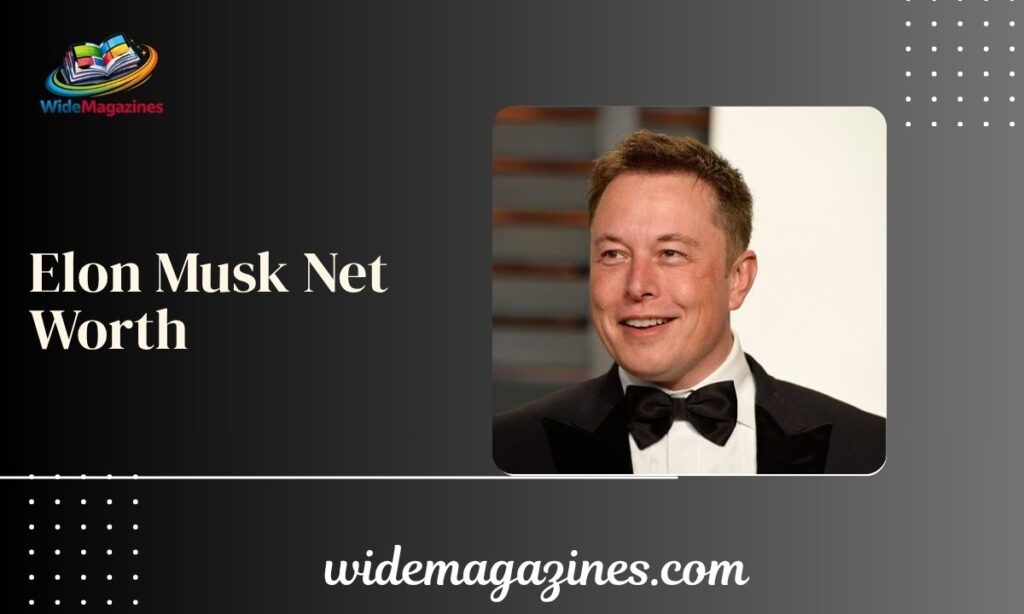
Elon Musk is one of the richest and most famous entrepreneurs in the world. He is known for leading companies like Tesla, Inc., SpaceX, and xAI. In 2026, his net worth continues to attract global attention as his businesses grow and expand into new industries.
Many financial experts believe Elon Musk could become the world’s first trillionaire if his companies keep increasing in value. His wealth comes mainly from company ownership rather than a salary. This article explores Elon Musk’s net worth in 2026, the sources of his fortune, and the factors that could help him reach the historic trillion-dollar milestone.
What is Elon Musk’s Net Worth and Salary?
Elon Musk’s net worth is estimated at $1 trillion as of June 2026, according to Bloomberg Billionaires Index and Forbes real-time tracking. This makes him not only the richest individual alive but the wealthiest person in modern history — surpassing all previous records set by John D. Rockefeller, Jeff Bezos, and Bernard Arnault by an enormous margin.
His wealth is not liquid. As Musk himself has noted, less than 0.1% of his net worth is held in cash. The overwhelming majority is tied to ownership stakes in two private and public companies:
| Asset | Ownership Stake | Estimated Value (2026) |
| SpaceX | ~43% | ~$761 billion |
| Tesla | ~11–21% | ~$150–200 billion |
| X (Twitter), xAI, Other | Various | ~$100+ billion |
His wealth fluctuates daily with stock prices and private valuations, which means the exact number can shift by tens of billions in either direction within a single trading session.
World’s First Trillionaire
The milestone arrived on June 12, 2026, the day SpaceX began trading on the Nasdaq under the ticker symbol “SPCX.” The company priced its IPO at $135 per share, raising approximately $75 billion — the largest initial public offering in market history. The offering valued SpaceX at roughly $1.77 trillion, and on its first day of trading, the market cap climbed above $2 trillion.
Before the IPO, Bloomberg had pegged Musk’s net worth at close to $980 billion. Once his approximately 43% stake in SpaceX was valued at the offering price, his total fortune surged past the trillion-dollar threshold by an estimated $274 billion overnight.
To put this in perspective:
- Musk is the first person in history to cross the $300B, $400B, $500B, $600B, $700B, $800B, $900B, and $1 trillion milestones
- His fortune surpasses the combined net worth of the next four richest people on Earth
- His wealth is larger than the GDP of many developed nations
Reuters, Bloomberg, and Forbes all officially recognized Musk as the world’s first trillionaire following the SpaceX IPO.
Salary & Compensation Plans
Elon Musk does not draw a traditional executive salary from Tesla. Instead, his compensation has always been structured around high-stakes, milestone-based equity plans designed to pay out only if the company achieves aggressive growth targets.
The 2018 Tesla Pay Package
In 2018, Tesla’s board approved a pay plan unlike anything seen in corporate history. Rather than a base salary, Musk was granted options equivalent to 1% of Tesla’s total shares for every $50 billion increase in the company’s market capitalization — starting from a base of $50 billion and capping at $600 billion. If Tesla never reached those milestones, he would receive nothing.
Tesla blew past the $600 billion ceiling by December 2020, technically entitling Musk to options worth roughly $55 billion. However, in January 2024, a Delaware court voided the package, ruling the board lacked independence when approving the deal.
The 2025 “Mars-Shot” Pay Package
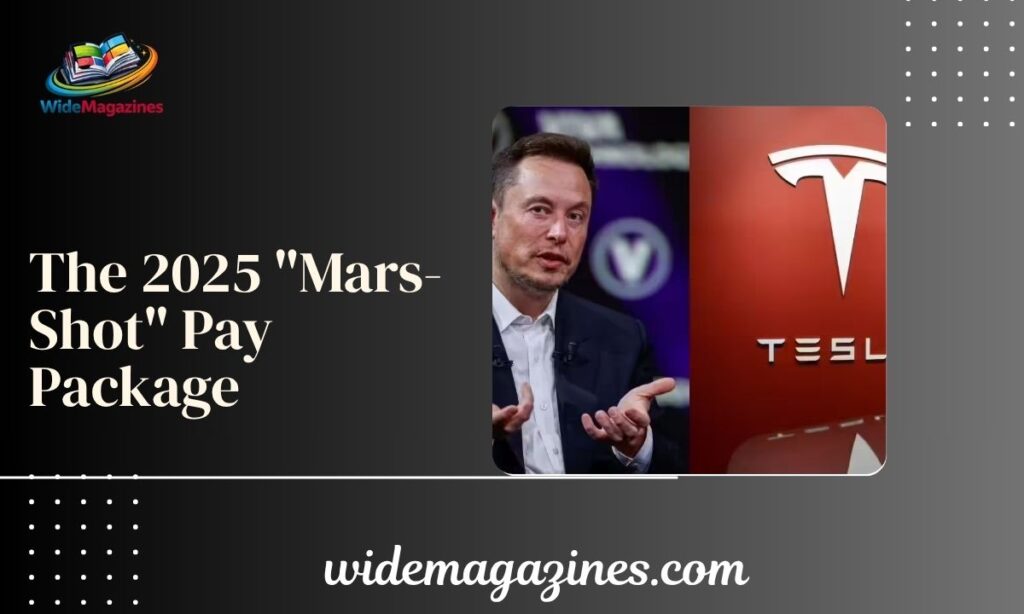
Following the court ruling, Tesla shareholders voted in November 2025 to approve a new 10-year incentive plan. The package is tied to milestones including:
- Growing Tesla’s market cap to $8.5 trillion
- Deploying the Optimus humanoid robot at mass scale
- Launching fully autonomous robotaxi operations globally
If all targets are hit, the plan could yield a payout valued at close to $1 trillion, further cementing Musk’s long-term commitment to Tesla’s AI and robotics pivot.
Early Life
Elon Reeve Musk was born on June 28, 1971, in Pretoria, South Africa, to an engineer father and a Canadian nutritionist mother. His interest in technology emerged early — he received his first computer at age 10, taught himself to code, and by age 12 had sold a self-made video game called Blastar to a computer magazine for $500.
At 17, he moved to Canada to attend Queen’s University, partly to avoid mandatory military service under South Africa’s apartheid-era government. In 1992, he transferred to the University of Pennsylvania, where he earned dual bachelor’s degrees in economics and physics. He briefly enrolled at Stanford University for a PhD in energy physics but dropped out after two days — the dot-com boom had begun, and Musk wanted to be inside it, not studying it.
Zip2
In 1995, Musk co-founded Zip2 Corporation alongside his brother Kimbal. The company built an online city guide for newspapers, essentially functioning as a combination of early Google Maps and Yelp. Major clients included The New York Times and the Chicago Tribune.
In 1999, during the height of the dot-com boom, Compaq acquired Zip2 for $307 million in cash plus $34 million in stock options. Musk walked away with roughly $22 million — the seed capital for everything that followed.
PayPal (X.com)
Armed with his Zip2 earnings, Musk co-founded X.com in 1999, an online financial services and email payments company. X.com soon merged with its main competitor, Confinity — the startup behind a money-transfer tool called PayPal. The merged company eventually took the PayPal name and became one of the dominant online payment platforms of its era.
In October 2002, eBay acquired PayPal for $1.5 billion in stock. As the company’s largest individual shareholder with an 11.7% stake, Musk received approximately $165 million from the sale. Rather than retire, he immediately redirected that capital into two ventures that most investors considered unrealistic at the time.
SpaceX
In 2002, Musk founded Space Exploration Technologies Corporation (SpaceX) with a single stated goal: drastically reduce the cost of space travel and eventually establish a self-sustaining human colony on Mars. The company nearly went bankrupt in 2008 after three failed rocket launches, surviving only when its fourth Falcon 1 mission succeeded and NASA awarded it a critical cargo contract.
By 2026, SpaceX had become the dominant force in global aerospace, built on three pillars:
- Starship — the world’s most powerful rocket, currently being prepared for orbital refueling missions and the first uncrewed Mars landing attempts
- Starlink — a satellite internet constellation with over 9 million subscribers worldwide, generating more than $15 billion in annual revenue
- National Security Contracts — billions in classified launch contracts and the Starshield military satellite network for the U.S. Department of Defense
SpaceX’s June 2026 IPO, which raised $75 billion at a $1.77 trillion valuation, was the largest in market history and the event that pushed Musk past the trillion-dollar mark.
Tesla
Musk joined Tesla Motors in 2004 as its lead investor and chairman, taking over as CEO in 2008. While Tesla pioneered the mainstream electric vehicle market with the Model S, Model 3, and Cybertruck, the company’s identity has shifted substantially under Musk’s “Mars-shot” strategy.
By early 2026, Tesla’s focus had moved firmly into AI, robotics, and autonomous mobility:
- Optimus Robot — Tesla began retooling its Fremont factory for mass production of its humanoid robot, targeting 1 million units per year
- Cybercab — a fully autonomous vehicle without a steering wheel, entering production in April 2026 as the flagship of Tesla’s robotaxi service
- FSD Licensing — Tesla now licenses its Full Self-Driving software to other automakers, creating a high-margin software revenue stream
Tesla’s market capitalization hovered around $1.5 trillion in mid-2026, driven as much by its AI and robotics narrative as by vehicle sales.
Other Ventures
Beyond his two flagship companies, Musk has built or acquired several additional ventures:
- X (formerly Twitter) — Acquired in 2022 for $44 billion and rebranded as a broader “everything app” combining social media, payments, and long-form content
- xAI — An artificial intelligence company launched in 2023 to compete with OpenAI and Google DeepMind; merged with SpaceX in February 2026
- Neuralink — A neurotechnology company developing implantable brain-computer interfaces, with early human trials underway
- The Boring Company — Focused on underground tunnel transportation to ease urban traffic congestion, with active projects in Las Vegas and other cities
SpaceX + xAI Merger
In February 2026, Musk completed one of the most ambitious corporate restructurings in tech history by merging SpaceX and xAI into a single integrated entity valued at $1.25 trillion. The deal brought together the Grok AI platform, the X social network, and the Starlink satellite infrastructure under one roof.
The primary strategic objective was the creation of orbital data centers — large-scale AI computing clusters launched into space and powered by direct solar energy — positioning SpaceX as the backbone of next-generation global AI infrastructure. Analysts noted the merger also removed energy constraints that have limited terrestrial AI development, as space-based solar power can theoretically generate compute capacity at a scale impossible on Earth.
Personal Life
Elon Musk has been married three times — twice to the same woman. His first marriage was to Canadian author Justine Wilson (2000–2008), with whom he has five sons. He was subsequently married to British actress Talulah Riley twice (2010–2012 and 2013–2016).
He has been publicly linked with actress Amber Heard and Canadian musician Grimes, with whom he has two children, including a son born in May 2020 named X Æ A-Xii. In late 2021, he also welcomed twins with a Neuralink executive.
In total, Musk has 10 children. In 2022, reports emerged that he had an affair with Nicole Shanahan, then-wife of Google co-founder Sergey Brin — an incident that reportedly led to Brin filing for divorce from Shanahan.
Real Estate
Musk made headlines in 2020 when he announced his intention to sell all of his physical possessions, starting with his California real estate holdings. He followed through, selling six Bel-Air homes in Los Angeles — including a 20,000-square-foot estate purchased for $17 million — with four sold simultaneously to a single buyer in December 2020.
Today, his primary real estate holdings include:
- A 16,000-square-foot villa on 50 acres in Hillsborough, Northern California, purchased for $23.36 million in 2017
- Several contiguous properties in Austin, Texas, acquired for a combined $35 million, including a 14,400-square-foot Tuscan-style mansion
Elon Musk: Net Worth Milestones
| Year | Event | Net Worth |
| 1999 | Zip2 Sale to Compaq | $22 million |
| 2002 | PayPal Acquisition by eBay | $175 million |
| 2010 | Tesla IPO | $650 million |
| 2012 | Forbes Billionaires List Debut | $2 billion |
| Jan 2020 | Start of Decade | $28 billion |
| Nov 2020 | Surpassed Bill Gates | $128 billion |
| Jan 2021 | Became World’s Richest Person | $195 billion |
| Nov 2021 | Tesla Peak ($1.2T market cap) | $335 billion |
| Oct 2025 | First to Reach $500 Billion | $500 billion |
| Dec 2025 | Pay Package Reinstatement | $700 billion |
| Feb 2026 | SpaceX-xAI Merger | $750 billion |
| June 2026 | SpaceX IPO — World’s First Trillionaire | $1 trillion+ |
Conclusion
Elon Musk’s journey from a self-taught programmer in Pretoria to the world’s first trillionaire is one of the most extraordinary wealth stories in human history. His fortune was not built through inheritance or financial speculation but through repeated high-risk bets on technologies most people dismissed — electric cars when the industry was dominated by fossil fuels, private rockets when only governments launched things into orbit, and AI when few saw it as a viable commercial product.
The SpaceX IPO in June 2026 was the culmination of more than two decades of compounding those bets. With Tesla’s robotics pivot, SpaceX’s space-based AI infrastructure, and xAI’s ambitions in artificial general intelligence, Musk’s wealth trajectory shows little sign of reversing.
FAQs
What is Elon Musk’s net worth in 2026?
Elon Musk’s net worth is approximately $1 trillion as of June 2026, following SpaceX’s historic IPO.
How did Elon Musk become a trillionaire?
He crossed the trillion-dollar threshold when SpaceX priced its IPO at $135 per share in June 2026, valuing the company at $1.77 trillion and pushing his ~43% stake to roughly $761 billion.
Does Elon Musk take a salary?
Musk does not receive a traditional salary from Tesla. His compensation is structured entirely around performance-based equity milestones tied to the company’s market capitalization and operational targets.
What companies does Elon Musk own?
His main companies include SpaceX, Tesla, X (formerly Twitter), xAI, Neuralink, and The Boring Company.
Is Elon Musk the richest person in history?
Yes. As of June 2026, Musk holds the highest verified net worth of any individual in modern recorded history, surpassing all previous benchmarks including those set by John D. Rockefeller.
How many children does Elon Musk have?
Elon Musk has 10 children from multiple relationships, including five sons with his first wife Justine Wilson and two children with musician Grimes.
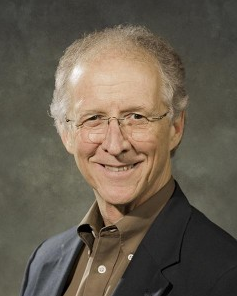
Pastor John is a devoted spiritual guide with years of experience in ministry and prayer teaching. Passionate about helping others grow in faith, he shares practical insights, prayer guidance, and reflections from the Prayer to inspire a closer relationship with God.